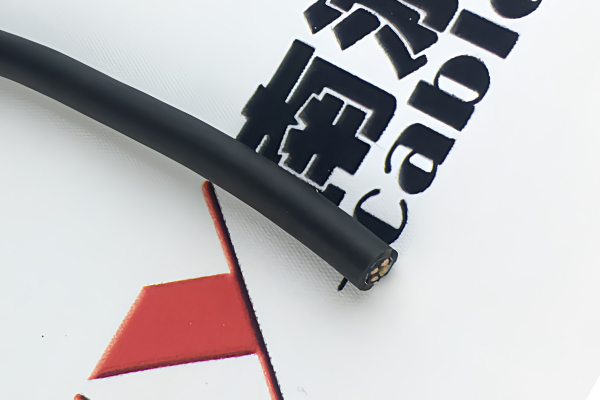
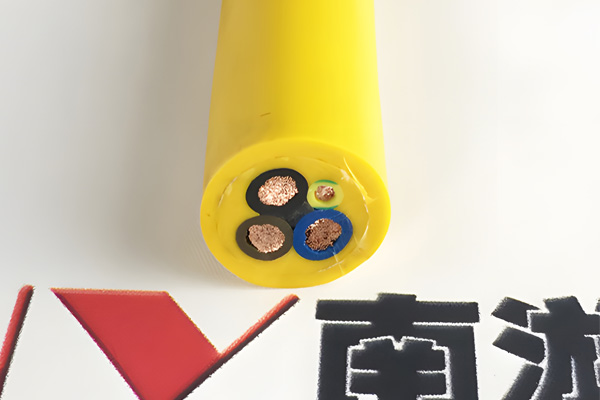
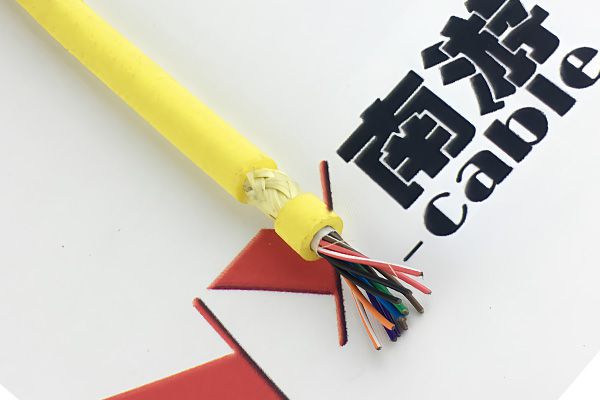
Built around water ingress rather than density. Longitudinal water blocking, tinned copper and a TPEE or PUR jacket for salt spray and permanent immersion.
Seawater attacks a cable at three points: the conductor, the shield and the jacket. Tinned copper handles the conductor. Longitudinal water blocking stops a nick in the jacket from letting water travel the length of the cable and reach a termination weeks later — the failure mode that makes intermittent faults so hard to find. TPEE or PUR handles the jacket, because both resist hydrolysis in permanent immersion where PVC does not.
| Parameter | Value |
|---|---|
| Rated voltage | up to 1 kV |
| Conductor | tinned copper |
| Jacket options | TPEE / polyurethane (PUR) |
| Water blocking | longitudinal |
| Exposure | salt spray, permanent immersion |
| Operating temperature, PUR | -40 to +80 °C |
| Standard basis | customer specification |
| Minimum order | 100 m |
Wet, salty and permanently immersed environments.
Seawater-resistant cable buying questions.
Yes. The construction uses tinned copper, longitudinal water blocking and a TPEE or PUR jacket, all chosen for permanent immersion. Working depth is specified per order against the actual installation rather than published as a single figure.
Seawater-resistant cable is engineered against water ingress and corrosion, and is normally heavier than water so it sinks and stays put. Neutral buoyancy cable is engineered around density so it does not load a vehicle. The two are often used on the same subsea system for different runs.
Outdoor exposure is specified per order. Tell us whether the run is exposed to direct sun and we select the jacket compound accordingly rather than assuming a standard grade.
MOQ 100 m · standard lead time 5-7 days · CE and RoHS documentation